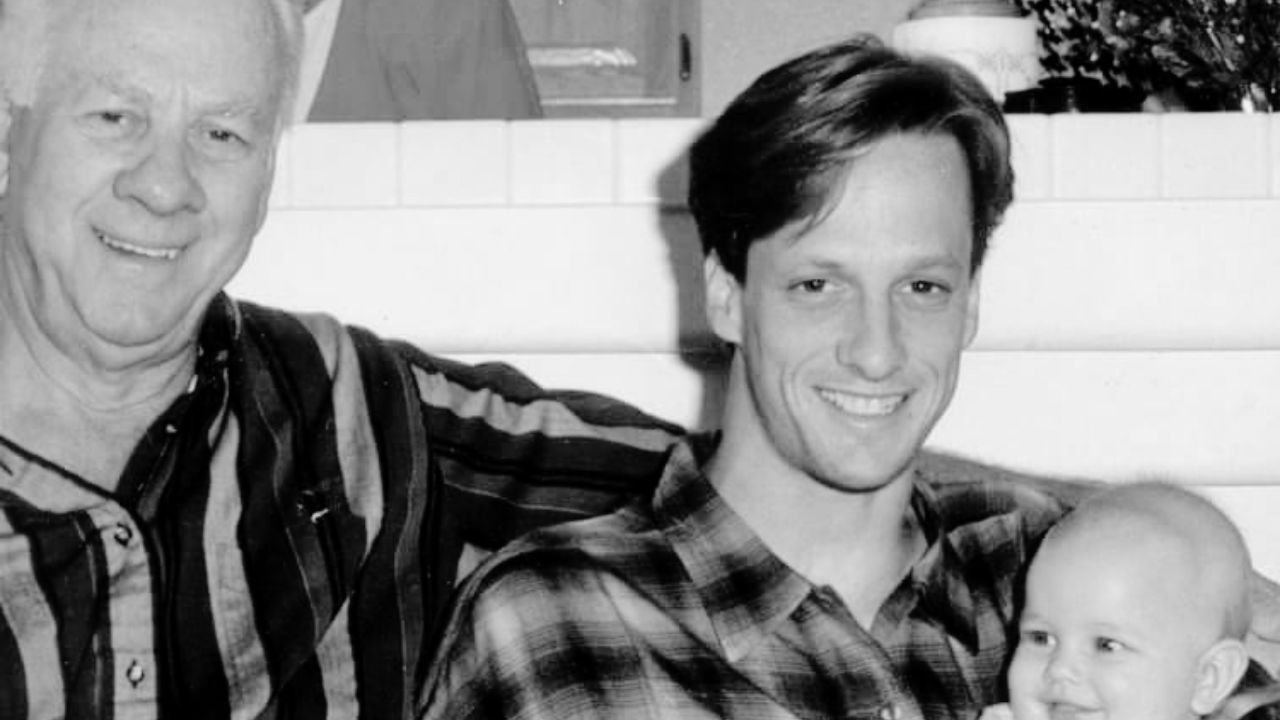
Tony Hawk is one of the most recognized names in skateboarding history. His name appears on video games, shoes, and sporting highlight reels around the world. But far less is known about the man who raised him — his father, Frank Hawk.
This article covers what records and biographical sources tell us about Frank Peter Rupert Hawk: his background, his family, his career, and his role in Tony’s early life. It also explains where the available information is uncertain or unverified, so readers can make sense of what is actually confirmed.
Who Frank Peter Rupert Hawk Was?
Genealogy records and biographical databases identify Frank Peter Rupert Hawk as the father of professional skateboarder Tony Hawk. That connection is the main reason people search for his name today.
Tony Hawk’s full legal name is Anthony Frank Hawk. The middle name “Frank” reflects his father’s first name — a common family naming tradition. Frank is not a public figure in his own right, and most available information about him comes through his relationship to Tony.
MyHeritage lists Frank’s occupation as a military officer, which lines up with secondary biographical sources that describe him as a U.S. Navy officer. Beyond that, his personal history is not widely documented in publicly available records.
Birth, Name Records, and a Notable Discrepancy
Genealogy sources list Frank’s birth date as May 3, 1923, in San Diego, California. That detail appears consistently across multiple records and is generally accepted in family-history databases.
The full name “Frank Peter Rupert Hawk” appears in certain biographical databases. However, WikiTree — which tracks genealogy records carefully — reports something different. According to WikiTree, available obituary records, the Social Security Death Index, and the California death index use only the middle initial “H.” The names “Peter Rupert” do not appear in those official sources.
This kind of discrepancy is not unusual. Different records are created at different times and drawn from different sources, which can lead to variations in how a name is recorded. Some databases fill in details from other databases without always tracing back to a primary document.
Readers should treat “Peter Rupert” as a name that appears in genealogy-style databases but has not been confirmed in official government or obituary records. Neither version should be treated as definitively correct without a primary document to back it up.
His Marriage and Four Children
Frank married Nancy Elizabeth Skaggs — also listed in records as Nancy Elizabeth Hawk — on August 17, 1945, in San Diego, California. The marriage came near the end of World War II, a time when many young Americans were marrying after or during military service.
Genealogy records list four children born to Frank and Nancy:
- Lenore Ann Dale
- Patricia Jo Hawk
- Stephen Andrew Hawk
- Anthony Frank Hawk — known publicly as Tony Hawk
Tony was the youngest child, born on May 12, 1968, in Carlsbad, California — more than two decades after his parents married. That age gap suggests Frank and Nancy were considerably older parents by the time Tony came along.
The family lived in Southern California, which turned out to be the right place at the right time. The region became the center of modern skateboarding culture through the 1970s and 1980s, and growing up there gave Tony access to a scene that was rapidly developing into something serious.
Frank’s Military Service and Civilian Work
MyHeritage describes Frank as a military officer. Several secondary biographical sources go further and describe him as a U.S. Navy officer, sometimes noting that he was retired from the Navy by the time Tony was growing up.
However, no primary military records, service dates, specific ranks, or unit assignments have been confirmed through publicly available official sources. The article does not repeat specific military details that have not been independently verified.
After his military service, secondary accounts describe Frank working as a small-appliance salesman. This detail adds color to the family picture but comes from secondary biographical sources, not official employment records. It is included here as background context, not as a fully documented career history.
Frank’s Role in Tony’s Early Skateboarding Career
Tony Hawk did not become a professional skateboarder in a vacuum. Biographical accounts describe Frank as a supportive presence in Tony’s early years in the sport.
According to secondary sources, Frank drove Tony to skateboarding events and stood behind his son’s decision to pursue professional skating at a young age. That kind of practical, consistent support — showing up, driving, encouraging — matters enormously for a young athlete. It is not glamorous work, but it often makes the difference.
It would be an overstatement to say Frank created Tony’s career or that Tony’s success belongs to his father. What the available accounts suggest is simpler and more believable: Frank was a supportive parent who took his youngest child’s unusual passion seriously.
There is one additional claim worth mentioning carefully. A secondary source suggests Frank may have been involved in helping design the Dodge Park skate park in Columbus, Ohio, which reportedly opened around 1990. However, this detail has not been confirmed through municipal records, newspaper archives, or skateboarding publications. It is mentioned here only as a claim that appears in some sources, not as an established fact.
Frank’s Death and Final Years
Genealogy records list Frank’s death as occurring on July 27, 1995, in Oceanside, California. He was buried in San Diego on July 31, 1995. He was 72 years old at the time of his death.
Some secondary sources have claimed that Frank died of lung cancer. However, the research available for this article does not include a primary source — such as an obituary or death record — that confirms the cause of death. That detail is repeated in some biographical articles online, but repetition alone does not confirm accuracy.
By the time Frank passed away, Tony Hawk was already an established professional skateboarder. Tony had turned pro as a teenager and had spent years competing at the top level of the sport before his father’s death.
Why Frank Hawk Still Matters?
Frank Peter Rupert Hawk was not a celebrity. He did not appear in magazines, give interviews, or seek public attention. Most of what we know about him comes from genealogy databases and secondary biographical accounts written about his famous son.
That is actually a fairly common story for parents of well-known athletes and performers. The person behind the public figure often has only a thin public record. Their importance is real, but it lives mostly in private family history rather than documented archives.
For those researching Tony Hawk’s family background, Frank’s story offers a grounded perspective. He appears to have been a military veteran, a working father, and a parent who supported his youngest child’s unconventional path without necessarily understanding where it would lead. That is a recognizable kind of parenting, even if it belongs to an extraordinary family.
For more profiles and background stories on public figures and the families behind them, visit Upward Business Daily.
A Quick Summary of What Records Confirm
- Full name: Listed as Frank Peter Rupert Hawk in some databases; listed as Frank H. Hawk in obituary and government index records
- Born: May 3, 1923, San Diego, California
- Married: Nancy Elizabeth Skaggs, August 17, 1945, San Diego
- Children: Lenore Ann Dale, Patricia Jo Hawk, Stephen Andrew Hawk, Anthony Frank Hawk (Tony Hawk)
- Career: Listed as a military officer; secondary sources describe U.S. Navy service and later appliance sales work
- Died: July 27, 1995, Oceanside, California; buried July 31, 1995, San Diego
Frank Hawk was, by all available accounts, a quiet presence behind one of skateboarding’s loudest names. His life before Tony’s fame is not well documented, but what records show is enough to understand the basic shape of his story: a Southern California family man, a military veteran, and a father who stayed in his son’s corner when it counted.
Also Read: