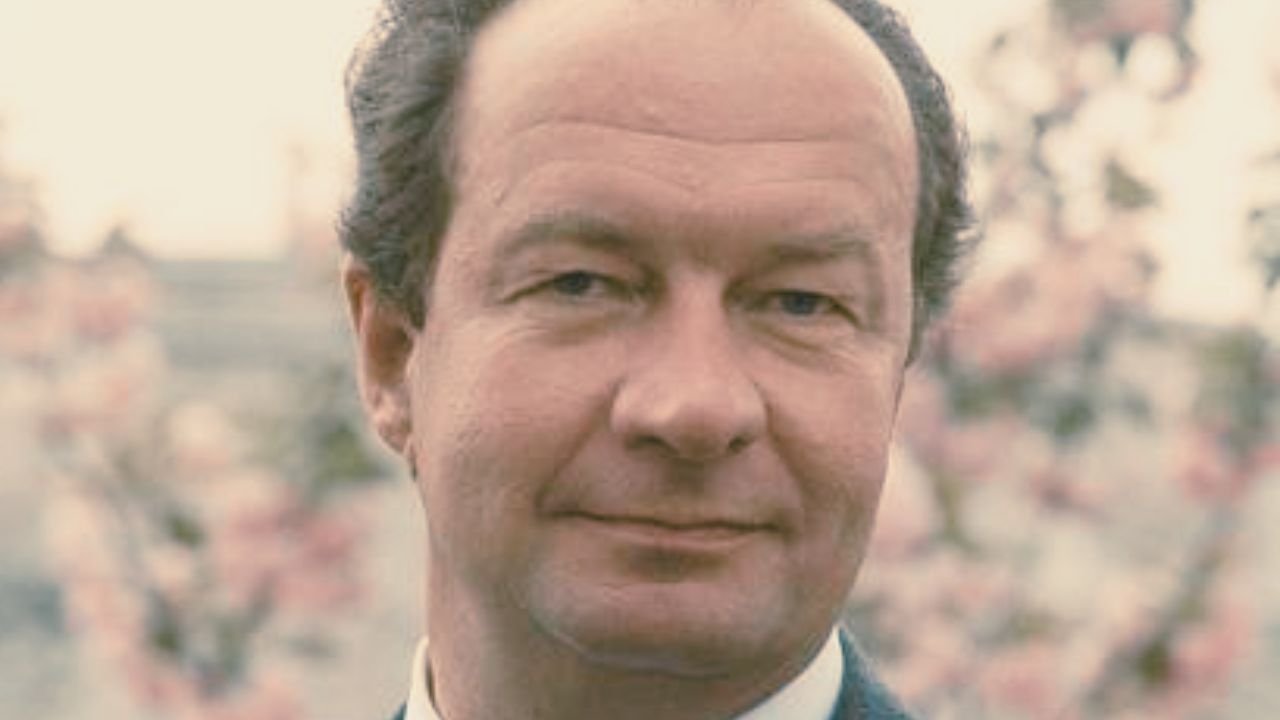
Most people who search for Wolf Rüdiger Hess arrive at the same question — who was the man behind the name, apart from being the son of one of the Third Reich’s most prominent figures? It is a fair question. His public identity was shaped almost entirely by his parentage, yet he also had a professional life, wrote books, and spent decades fighting for something he believed in deeply.
This article covers what is confirmed: his birth, his education, his career as an architect, and his long campaign to defend his father’s reputation. It also looks at his books and his public claims about how Rudolf Hess died — while being clear about what is documented fact and what remains disputed.
Who Was Wolf Rüdiger Hess?
Wolf Rüdiger Hess was born in Munich on 18 November 1937. He died in the same city on 24 October 2001, at the age of 63. He was the only child of Rudolf Hess — Adolf Hitler’s deputy in the Nazi Party — and his wife Ilse Hess, née Pröhl.
In German sources, his surname appears as “Heß.” English-language sources generally write it as “Hess.” Both refer to the same person, so readers coming from genealogy searches should not be confused by the variation.
Beyond his family name, Wolf was not a public figure in the conventional sense. He did not pursue fame, and he was not a politician or entertainer. The attention he received throughout his life came almost entirely from who his father was — not from an independent career in the public eye.
His Father’s Imprisonment and Its Effect on the Family
To understand Wolf’s life, it helps to understand what happened to his father before Wolf was even old enough to form memories of him.
In May 1941, Rudolf Hess flew solo to Scotland on an unauthorized mission. British authorities captured him, and he spent the rest of the war as a prisoner. After the war ended, he was tried at Nuremberg and sentenced to life imprisonment at Spandau Prison in Berlin.
Wolf was just a young child when his father’s imprisonment began. He would spend his entire adult life with his father behind bars. That is not a small thing. Growing up without a father present — and growing up knowing that father was one of the most controversial figures in modern history — would shape almost everything that followed.
It is important to be clear here: Wolf bore no responsibility for his father’s actions or crimes. His circumstances were the result of his parentage, not choices he made. Understanding this is essential before examining what he chose to do with his adult life.
Education and Career as an Architect
Wolf Rüdiger Hess attended local school from 1947 and later pursued studies in architecture. According to available biographical summaries, he qualified as an architect in 1961. Some sources also describe him as working as a civil engineer in Munich.
His professional career ran largely parallel to — and separate from — the public advocacy that would later define his name. He appears to have worked as a practising architect in Munich for much of his adult life, though his day-to-day work received almost no public attention.
This is worth noting. It is easy to look at someone defined by a famous family connection and assume they did nothing else. Wolf had a profession. He trained for it, qualified in it, and worked in it. That part of his life simply did not attract media interest, because the story of Rudolf Hess’s son was always going to overshadow everything else.
The biographical details about his education and architectural career come from secondary sources rather than institutional records, so they are presented here with appropriate caution. The broad outline, however, is consistent across multiple reference sources.
His Campaign for Rudolf Hess’s Release
Wolf’s most significant public activity was his decades-long campaign for his father’s release from Spandau Prison. He argued that the continued imprisonment was unjust and worked to present Rudolf Hess in a more sympathetic light than mainstream historical accounts typically allow.
He is associated with leading the Rudolf-Heß-Gesellschaft, an organization connected to this advocacy work. His efforts were noted publicly but ultimately did not succeed. Rudolf Hess remained at Spandau until his death in August 1987.
It is worth pausing here to separate a few things that are sometimes bundled together. Advocating for a parent’s release from prison is a recognizable human act. Arguing that your father was treated unjustly is also something many people would do, regardless of who the father was. That is not automatically the same as endorsing a political ideology or denying historical events.
At the same time, some sources describe Wolf as sympathetic to views that go beyond simple family loyalty. These descriptions require careful handling. Without strong, independently verified sources, it would not be appropriate to attach firm political labels to Wolf in this article. What is clear is that his advocacy was shaped by deep personal investment rather than political neutrality.
His Books and the Murder Theory
Wolf Rüdiger Hess authored books that reflected both his personal perspective and his public campaign. Two titles associated with him are My Father Rudolf Hess and Who Murdered My Father, Rudolf Hess?
These books are valuable as primary sources for understanding how Wolf thought about his father and interpreted the events surrounding his death. They are not, however, neutral historical accounts. They represent the viewpoint of a son who was personally invested in his father’s reputation and legacy.
The central argument Wolf put forward — particularly in the second book — was that Rudolf Hess did not die by suicide, as the official conclusion stated, but was instead murdered. He alleged British involvement in the death.
This claim should be understood clearly: it is Wolf’s allegation, not an established historical fact. The official finding from Spandau Prison authorities was that Rudolf Hess died by suicide in August 1987, at the age of 93. Wolf rejected that conclusion for the rest of his life.
His books give readers a window into the experience of being Rudolf Hess’s son — the belief that his father had been wronged, the frustration of watching decades pass without release, and the conviction that the death itself was not what officials claimed. Whether or not readers find those arguments persuasive, the books stand as a record of one man’s deeply held position.
For those reading about historical figures and their families, it helps to treat books like these the way you might treat any family member’s testimony. They tell you what that person believed and felt. They are not sufficient on their own to settle disputed historical questions.
His Personal Life and Later Years
Public information about Wolf’s personal life is limited. Sources identify his wife as Andrea Hess and his son as Wolf Andreas Hess. Beyond those names, the available record does not provide much detail, and it would not be appropriate to speculate about their lives or views.
Wolf continued his advocacy and publishing activities for many years after his father’s death in 1987. He remained committed to the murder theory and to defending his father’s memory until the end of his own life.
He died in Munich on 24 October 2001. He was 63 years old. There is nothing particularly dramatic to add about how his life ended. The more significant point is simply that he remained publicly committed to the same cause for decades — a cause that began when he was still a child, waiting for a father who would never come home from prison.
Separating the Man From the Name
Wolf Rüdiger Hess presents an interesting challenge for anyone writing about him. He was not famous for his own achievements. He was an architect who trained and worked in Munich. He was also a son who spent his adult life fighting — through books, organizations, and public statements — to change the way the world saw his father.
Those two things existed side by side throughout his life. The professional and the personal. The quiet day-to-day work that nobody wrote about, and the public campaign that made him a recognizable name in certain historical and political circles.
Understanding his story also requires keeping a clear distinction between what is documented and what is claimed. Rudolf Hess’s capture, trial, and imprisonment are matters of historical record. Wolf’s belief that his father was murdered is a claim — one he made publicly and repeatedly, but one that does not align with official findings. And Wolf’s own life, separate from his father’s, was that of a trained professional who happened to carry one of the most recognizable surnames of the twentieth century.
If you are researching this topic from a broader historical or biographical angle, Upward Business Daily covers profiles and background pieces on figures connected to major historical events and public life.
Final Thoughts
Wolf Rüdiger Hess lived a life defined by circumstances he did not choose. Born in Munich in 1937 to one of the most prominent figures of the Nazi era, he grew up largely without his father and spent decades trying to change how that father was remembered.
He qualified as an architect, worked in Munich, wrote books, and led an advocacy organization. He believed his father was murdered and said so publicly. He remained a committed advocate until his death in 2001.
What his story offers — beyond the historical context of his father — is a portrait of how lives can be shaped by parentage in ways that neither the parent nor the child fully controls. Wolf Rüdiger Hess did not choose the name he was born with. What he chose was what to do with it.
Also Read: