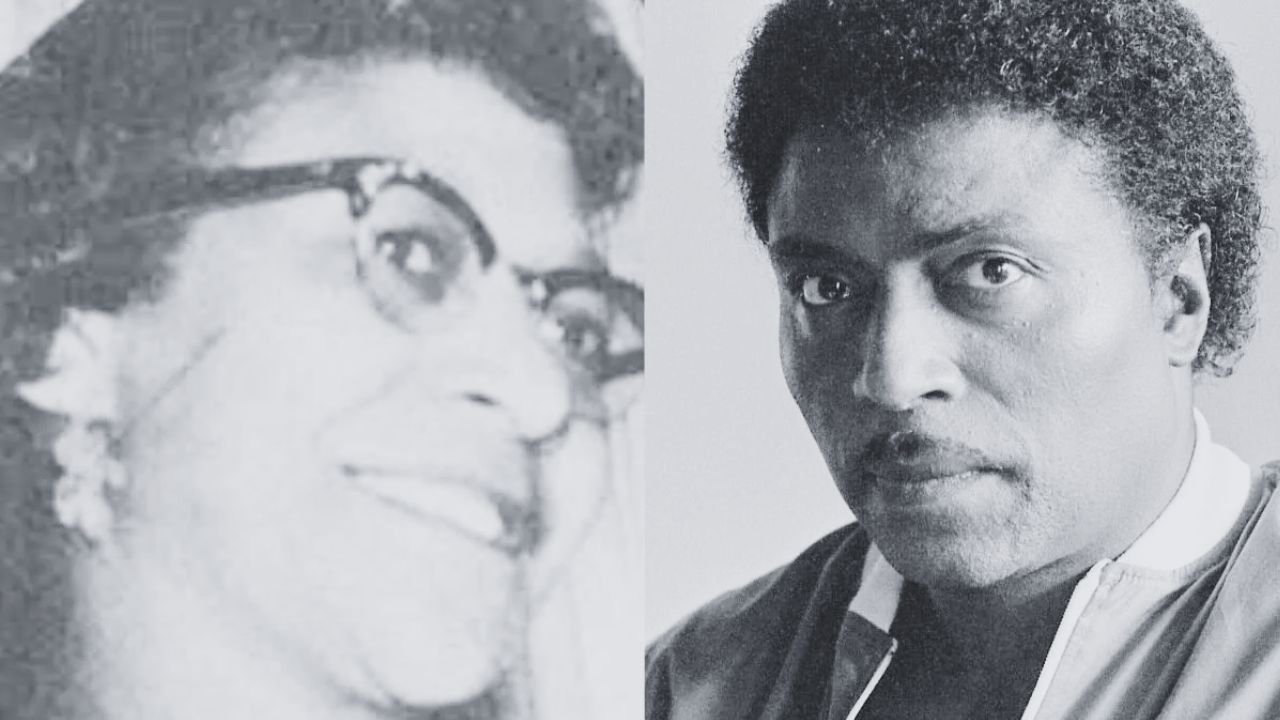
Most people recognize the name Little Richard. Far fewer know the name Leva Mae Stewart — the woman who gave birth to one of rock and roll’s most important figures. She was not a performer or a public personality. But her name keeps appearing in genealogy searches, biographical databases, and historical records connected to Little Richard‘s life and family.
This article covers who Leva Mae Stewart was, what records say about her birth, death, and family, and how to make sense of the name variations and occasional conflicts you might find across different sources.
Who Was Leva Mae Stewart?
Leva Mae Stewart was the mother of Richard Wayne Penniman, the musician professionally known as Little Richard. Her full name appears across different records as Leva Mae Stewart, Leva Mae Penniman, and Leva Mae (Stewart) Penniman. These all refer to the same person — Stewart was her birth surname, and Penniman came from her marriage to Charles “Bud” Penniman.
She was not a public figure in her own right. People search her name almost entirely because of her connection to her son. Biographical sources including BlackPast and the Encyclopedia of Seventh-day Adventists both confirm that she and Charles “Bud” Penniman were Little Richard’s parents.
It is worth keeping that framing in place throughout. Leva Mae Stewart was a private individual who happened to be the mother of one of the most recognizable names in American music history.
Birth, Death, and the Name Variations in Her Records
Genealogy records give her birth date as December 24, 1912, in Macon, Bibb County, Georgia. She died on January 11, 1984, in Riverside, California, at age 71. Sources including WikiTree, Geni, and Find a Grave all support these dates.
The name variation issue is straightforward once you understand how genealogy databases handle maiden names versus married names. “Leva Mae Stewart” is her birth or maiden-name form. “Leva Mae Penniman” is her married-name form. When you see “Leva Mae (Stewart) Penniman,” that is simply a genealogy convention for showing both names together. All three forms refer to the same woman.
There is one genuine discrepancy worth flagging. Available records do not fully agree on her burial location. One source points to Bibb Mount Zion Baptist Church Cemetery in Macon, Georgia. Another lists Good Samaritan Society Cemetery. These listings have not been fully reconciled across the available sources, so it is better to acknowledge the conflict than to pick one and present it as settled fact.
Her Family — Husband, Children, and Her Own Parents
Leva Mae Stewart married Charles “Bud” Penniman, who genealogy records place as living from approximately 1910 to 1952. Together, they raised a large family in Macon, Georgia.
WikiTree identifies several of their children by name, including Charles Penniman Jr., Richard Wayne Penniman, Marquette Lafayette Penniman, and Horace D. Penniman. Multiple biographical sources — including BlackPast, AncientFaces, and a New York State Senate resolution — describe Little Richard as the third of 12 children. That detail is well-supported across different types of sources.
Her own parents, according to WikiTree, were Richard Candus Stewart and Irene Veal Stewart. The same record names several of her siblings, though these details come from a collaborative genealogy site and should be understood as genealogical records rather than independently verified biography.
A simple family line helps clarify the connections:
- Richard Candus Stewart and Irene Veal Stewart (her parents)
- Leva Mae Stewart (their daughter)
- Richard Wayne Penniman, known professionally as Little Richard (her son)
The Reported Mohegan Ancestry Claim
A Geni profile notes that, according to an interview with her son Little Richard, Leva Mae Stewart was described as Mohegan Indian. That is worth acknowledging because it circulates in genealogy discussions connected to her name.
However, this claim comes from a family account shared by her son — not from tribal records, census documentation, or archival sources currently available in public research. It should be understood as a reported family claim, not a confirmed genealogical or tribal fact. That does not mean it is false. It simply means the available evidence does not go beyond what Little Richard reportedly said in an interview.
When reading genealogy profiles, it is always useful to check where a claim originates. User-submitted profiles can carry accurate family history passed down through generations, but they can also reflect unverified family traditions. Both are possible here.
Leva Mae Stewart’s Connection to Little Richard’s Life
His Early Years in Macon
Little Richard was born in Macon, Georgia, on December 5, 1932. He grew up surrounded by A.M.E., Baptist, and Pentecostal church communities and sang in church settings from an early age. This religious environment was a consistent part of his background, and it stayed with him throughout his adult life — even as his music career took him far from Georgia.
Beyond that general picture, available sources do not provide extensive detail about Leva Mae Stewart’s specific day-to-day role in raising her children. The public record simply does not go that far for a private individual like her.
After Little Richard Became Famous
One of the clearest documented examples of Leva Mae Stewart’s presence in her son’s adult life comes from a Los Angeles Times report. After Little Richard found success in music, he purchased a Los Angeles home for himself and his mother. According to that account, the home became a gathering place for musicians and entertainers, and Stewart was associated with large dinners held there.
That detail matters because it shows she remained part of his life after he became one of the most famous performers in the world. She was not simply a background figure from his childhood — she was present, in a home he bought specifically to include her.
Why Little Richard’s Story Makes Her Worth Knowing?
People search for Leva Mae Stewart because her son changed American music. Little Richard helped define early rock and roll through recordings like “Tutti Frutti,” “Long Tall Sally,” “Good Golly Miss Molly,” and “Keep A-Knockin’.” BlackPast describes him as one of the most influential artists of early rock and roll, and a New York State Senate resolution recognized his foundational role in shaping the genre.
He came out of a large working-class family in Macon, Georgia, raised in a household shaped by church music and Southern community life. Leva Mae Stewart was central to that household. Understanding her — even in the limited way public records allow — adds real context to understanding where he came from.
For those doing deeper research into this family history, resources like Upward Business Daily can offer useful context on reading public records and genealogical sources carefully.
How to Read Genealogy Records About Her?
If you are researching Leva Mae Stewart across multiple databases, a few practical points can help.
First, treat collaborative genealogy sites — WikiTree, Geni, and similar platforms — as useful starting points, not final answers. They can supply names, dates, and family connections that are hard to find elsewhere. But they can also contain errors or unverified submissions. Cross-check important details wherever possible.
Second, do not be surprised when records conflict. The cemetery discrepancy mentioned earlier is a good example. Different databases sometimes pull from different underlying sources, and those sources do not always agree. The right response is to note the conflict, not silently pick one version.
Third, name variations are normal and do not indicate a different person. Leva Mae Stewart, Leva Mae Penniman, and Leva Mae (Stewart) Penniman all refer to the same woman. Once you know that, navigating different search results becomes much easier.
A Private Life Behind a Famous Name
Leva Mae Stewart lived from 1912 to 1984. She was born in Macon, Georgia, raised a family of 12 children with her husband Charles “Bud” Penniman, and later lived in California near her son during his years of fame. She was not a celebrity. She did not seek public attention. The records that exist about her are largely genealogical — birth and death dates, family names, burial information.
What gives her name significance today is straightforward: she was the mother of Little Richard, one of the founding figures of rock and roll. That connection is documented clearly across multiple reliable sources. The rest of what we know about her life is modest and carefully assembled from genealogy databases, one real estate account, and biographical references to her son.
She deserves to be remembered accurately — not inflated into something the records do not support, and not reduced to a footnote. She was a real person, and the family she was part of produced one of the most influential musicians of the twentieth century.
Also Read: