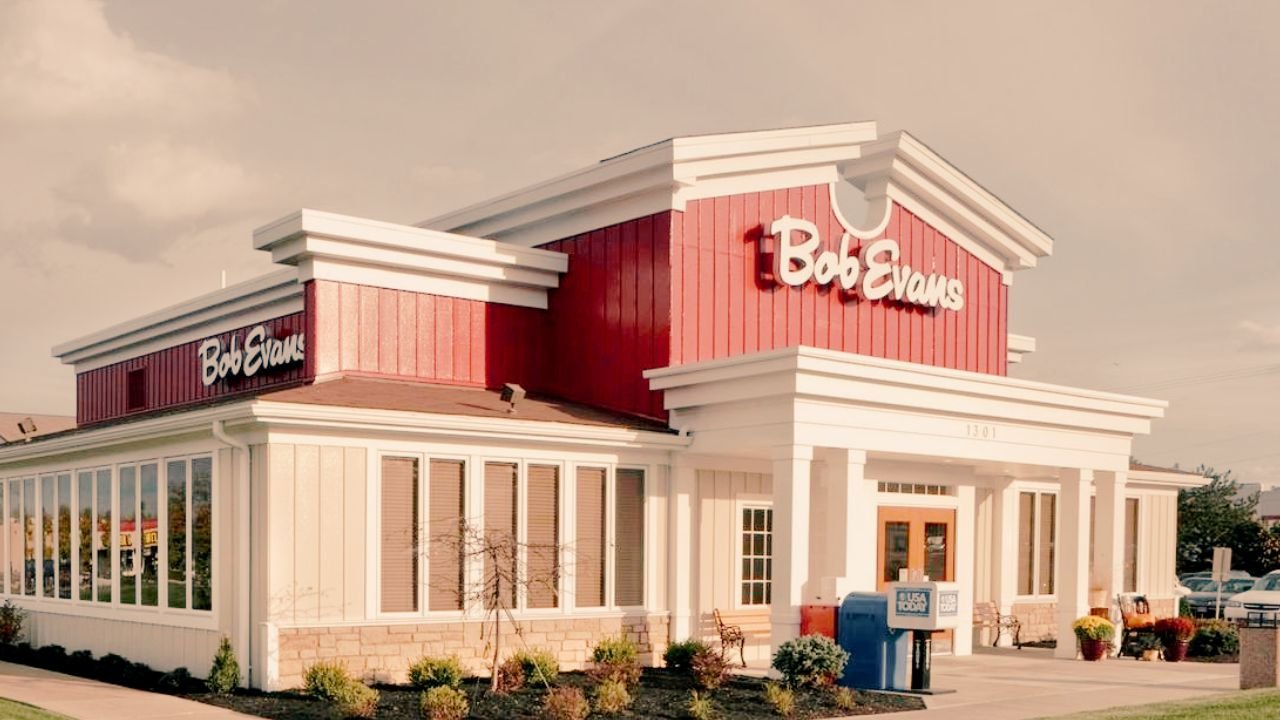
A Bob Evans closes suddenly in your town. The phone redirects to corporate. Within hours, social media is flooded with posts declaring the whole chain is finished. It’s a familiar pattern—and it’s not the full story.
This article gives you a direct answer on whether Bob Evans is shutting down, explains why closure rumors keep spreading, breaks down what two major ownership changes actually mean, and tells you how to check the status of a specific location near you.
The Short Answer: Bob Evans Is Not Going Out of Business
As of mid-2025, nearly 500 Bob Evans restaurants are still operating across the United States. No bankruptcy filings have been made. No chain-wide liquidation has been announced.
Bob Evans president John Fisher directly addressed the rumors, calling them “fake news” and stating that all restaurants are open for business. The chain operates across 18 states, with its headquarters still active in New Albany, Ohio.
So if you’ve been wondering whether the brand is on its last legs, the answer—based on current evidence—is no. It’s leaner than it used to be, but it’s still running.
Why So Many People Think the Chain Is Closing
The confusion is understandable. Several individual Bob Evans locations have closed abruptly and with little public notice. Recent examples include the Midway, Delaware location (April 2025), Melbourne, Florida (December 2024), a Butler County, Ohio location, and one in Evansville, Indiana.
When a local restaurant shuts down and the phone suddenly redirects to corporate headquarters, it feels like a company in free fall—even when it isn’t. Local news picks up the story. That story travels fast. The chain-level context rarely follows.
Here’s the key distinction: a local closure does not mean the company is going out of business. When the Butler County location shut down abruptly and calls rerouted to corporate, nearly 500 other Bob Evans locations were still open and serving customers that same day.
One restaurant closing in your market feels personal. But it’s a single data point, not a company-wide collapse.
Two Ownership Changes and What They Mean for the Brand
Part of the confusion around Bob Evans comes from corporate changes that are easy to misread.
The 2017 Split
In 2017, Golden Gate Capital purchased the Bob Evans restaurant division—more than 500 locations at the time—for approximately $565 million. That deal took the restaurant side of the business private.
At the same time, the packaged foods division (Bob Evans Farms) was sold separately to Post Holdings. That’s the company behind the sausage and mashed potatoes you still see in grocery stores today. The restaurant chain and the grocery products have been under different ownership since 2017.
This is worth knowing because some people assume that seeing Bob Evans products at the supermarket means the restaurants are fine—or vice versa. They’re separate businesses with separate futures.
The 2026 Sale to 4×4 Capital
In February 2026, Golden Gate Capital sold Bob Evans Restaurants to 4×4 Capital, a private-equity firm, for an undisclosed amount. Existing management, including CEO Mills, was retained. The new owners stated their intention to grow the roughly 400-unit chain over the long term.
Private-equity acquisitions of this type are typically focused on optimizing and improving a business, not immediately winding it down. That’s especially true when the buyer keeps the existing leadership team in place and publicly commits to expansion.
Neither the 2017 deal nor the 2026 sale was structured as an exit from the business. Both were ownership transitions, which naturally cause public uncertainty—but uncertainty isn’t the same as collapse.
Bob Evans Has a Long Pattern of Closing Weak Locations—Not the Whole Chain
This isn’t the first time Bob Evans has closed stores, and that context matters.
In 2016, Bob Evans Farms closed 27 restaurants and cut approximately 1,100 jobs. CEO Saed Mohseni said each of those locations had failed to meet company expectations. That was a deliberate decision to prune underperforming stores and strengthen the rest of the chain’s profitability.
The location count has declined from over 500 in 2017-2018 to nearly 500 as of mid-2025. That’s a reduction—but it’s not a collapse. A smaller, better-managed footprint is a different outcome than a company going under.
This approach isn’t unique to Bob Evans. Family-dining chains across the industry regularly close low-performing units as a basic business strategy. Keeping a location open that consistently loses money doesn’t help the brand or its employees elsewhere. Cutting it does.
When you see a Bob Evans close, there’s a good chance it was a specific location decision—not a sign that the whole operation is unraveling.
What “Struggling” Actually Looks Like vs. Going Out of Business
It’s fair to say Bob Evans faces real challenges. Rising costs, changing consumer habits, and competition in the family-dining space have put pressure on the brand. Some coverage has pointed to ongoing signs of strain, including the abrupt closures and a reduced footprint compared to peak years.
But “struggling” and “going out of business” are very different things. Plenty of businesses operate under pressure for years and find a path forward. Bob Evans, under new ownership with a stated growth plan, appears to be in that category—not in exit mode.
The honest picture is a chain that’s smaller than it once was, working through a transition period, and making deliberate cuts to stay viable. That’s a business operating under pressure, not one shutting its doors.
How to Check the Status of Your Local Bob Evans
If you’re worried about a specific location, skip the social media speculation and check directly.
- Visit the official Bob Evans website and use the location finder to see if your nearest restaurant is listed as open.
- Search the location on Google Maps or Apple Maps and look at the current status. If it says “Permanently closed,” that’s accurate. If it shows hours and recent activity, it’s likely still operating.
- Call the restaurant directly. If the call routes to corporate with no option to reach the local store, that can be a sign the location has closed.
More individual closures may happen as part of ongoing portfolio management. That’s a realistic expectation. But a chain-wide shutdown isn’t what current evidence points to.
The Bottom Line
Bob Evans is not going out of business. The evidence is clear on that. Nearly 500 locations are still operating, no bankruptcy has been filed, and the brand now has a new private-equity owner with stated growth plans.
What is true: individual locations continue to close, the overall footprint is smaller than it was at its peak, and the chain is navigating a competitive and difficult environment for family dining.
If you’re tracking this story from a business perspective, the most useful frame is this—Bob Evans is in restructuring mode, not shutdown mode. New ownership, a leaner location count, and retained management all point toward a company trying to stabilize and grow, not one preparing to exit.
For ongoing coverage of business news and brand developments like this, Upward Business Daily is worth bookmarking.
If your local Bob Evans closed, that’s a real loss for that community. But it doesn’t mean the rest of the chain is next. Know the difference, and don’t let one location’s closure write the whole story.
Also Read: