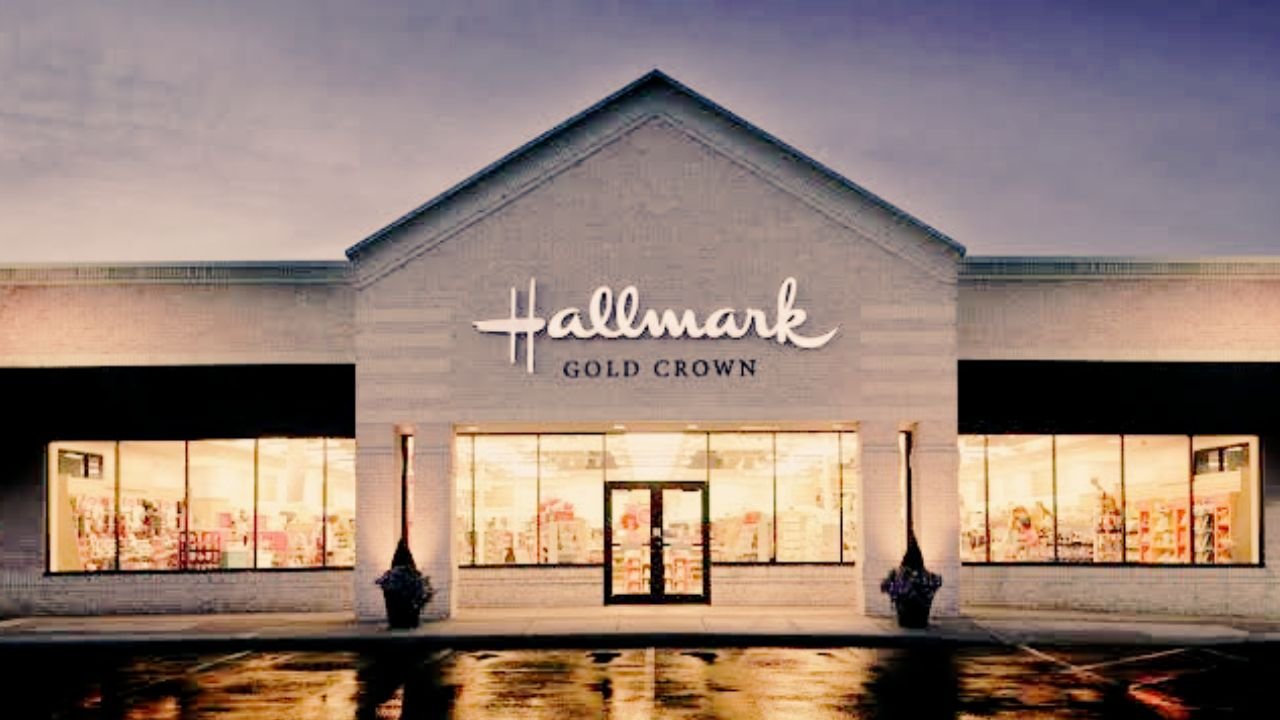
If you’ve seen headlines about Hallmark stores closing, you’re not alone. These stories have been circulating for years, and a recent bankruptcy filing involving a Hallmark franchise operator has added more fuel to the concern. But the situation is more complicated than most headlines let on.
Hallmark is not one simple business. It’s a privately held company with multiple divisions — greeting cards, retail stores, ornaments, and media. Some parts of the business are contracting. Others are still very active. And many of the store closures people read about have nothing to do with corporate financial trouble.
This article breaks down what’s actually happening, and why individual store closures don’t mean the company is shutting down.
Hallmark as a Company Is Not Shutting Down
To be direct about it: Hallmark Cards, Inc. is not going bankrupt, and no credible source suggests the company is facing a company-wide shutdown.
Hallmark operates across several distinct divisions — greeting cards, the Gold Crown retail network, Keepsake ornaments, and Hallmark Media. As of mid-2024, data cited in press coverage put Hallmark’s total store count at approximately 1,146 locations across the United States. That’s fewer than before, but it’s still a meaningful national presence.
The confusion tends to come from mixing up different things under the same “Hallmark” name. Individual store closures, franchise bankruptcies, and product line exits all generate headlines — and when those stories pile up, it can look like the whole company is in collapse. It isn’t.
Why So Many Hallmark Stores Are Closing
This is the question most people actually want answered. If Hallmark is still operating, why does it seem like stores keep closing?
The honest answer is that most closures come down to local circumstances, not corporate failure. Consider a few real examples:
- Mark’s Hallmark in Citrus Heights, CA closed after more than 30 years at Sunrise Mall — not because of any corporate directive, but because of uncertainty about the mall’s future. The owner’s other Hallmark locations remained open.
- Joelle’s Hallmark in Clarendon Hills, IL closed after 51 years in business. Coverage of the closure focused on its local history, not on any sign of corporate distress.
- A Hallmark store in Great Falls, MT closed when the owner retired and no new buyer stepped in. The mall moved on and filled the space with other tenants.
- A Bryant, AR location closed because a highway expansion project physically cut through the property — nothing to do with Hallmark’s finances.
Business Insider reported at least 16 Hallmark-branded stores closing across 12 states as of early 2020, most of them independently owned. When these stories get shared on social media over time, they create a cumulative impression that the brand is disappearing. In reality, each closure usually has its own local explanation.
The Difference Between Corporate Hallmark Stores and Independent Franchises
This is the structural detail that most readers don’t know — and it’s key to understanding the whole picture.
The Hallmark Gold Crown retail network includes two types of stores. Some are owned and operated directly by Hallmark Cards, Inc. Others are independently owned businesses that license the Hallmark brand, sell Hallmark products, and follow the company’s merchandising guidelines — but they are entirely separate financial entities.
When an independent operator closes their store, it reflects that owner’s situation: their lease terms, their retirement plans, their local market conditions. It does not reflect the financial health of Hallmark Cards, Inc.
Hallmark itself demonstrated this distinction during COVID-19, when it temporarily closed its company-owned Gold Crown stores and later reopened them. The corporate store network operated on a completely different track from the independent franchise locations during that period.
If you’re trying to find out whether a specific store near you is closing, the most reliable approaches are Hallmark’s store locator on their website, local news coverage, or the store’s own social media pages.
Banner’s Hallmark Filed for Bankruptcy — But That Is Not Hallmark Corporate
This is the most recent development that has prompted renewed concern about Hallmark’s future, and it’s worth addressing directly.
In September 2025, Banner’s of Abingdon LLC — the company behind Banner’s Hallmark — and approximately 40 affiliated entities filed for Chapter 11 bankruptcy. Banner’s operates 39 to 40 Hallmark Gold Crown stores, primarily in Virginia and surrounding states.
Banner’s Hallmark is an independent franchise operator. It is not Hallmark Cards, Inc. The bankruptcy filing listed Hallmark Marketing Company as one of Banner’s unsecured creditors — meaning Hallmark is owed money in this situation, not the entity in financial trouble.
It’s also worth noting that Chapter 11 is a reorganization process, not liquidation. Banner’s stores continued operating during the filing while the company worked to restructure its debts. That’s a very different outcome from a chain simply shutting its doors permanently.
Some consumer headlines described this event as an “iconic greeting card chain” filing for bankruptcy, which is technically accurate but easy to misread. Banner’s Hallmark is a regional franchise group, not the parent company behind the brand.
What Hallmark Has Actually Closed or Scaled Back
To be fair, there are real contractions happening within the Hallmark business. The company has exited or wound down several divisions over the years:
- Hallmark Home & Gifts, which included décor and gift brands such as Floor 9, Easy Tiger, and J.C. and Rollie, was closed at year-end according to trade press coverage.
- Hallmark Publishing, which produced tie-in romance and holiday novels often connected to its movies, shut down. Hallmark Media said it was exiting publishing to focus resources elsewhere.
- Back in 2014, Hallmark dropped its partyware line — paper plates, cups, napkins, and party favors — eliminating 125 to 150 jobs. This was one of the earlier signals that the company was narrowing its product focus.
These moves reflect a business that is refocusing, not one in freefall. Think of it the way you might think of a supermarket that closes its in-house bakery — the store is still operating, it’s just offering fewer things than before.
The Broader Pressure on Physical Greeting Card Retail
None of this happens in a vacuum. The greeting card industry has faced real headwinds for years. As digital communication became the norm — texts, emails, social media posts — the demand for physical cards declined across the industry, not just at Hallmark.
Hallmark has responded by adapting. That has included redesigning its app to support personalized paper card ordering, and experimenting with store-within-a-store concepts by placing Hallmark displays inside hospitals and hardware stores to reach customers where they already shop.
These adaptations don’t guarantee success, but they do show a company trying to stay relevant rather than simply running out the clock. The decline in physical card retail is real — but it doesn’t mean greeting cards or Hallmark have disappeared.
One Other Source of Confusion: Hallmark Financial Services
There is also a separate company called Hallmark Financial Services, which operates in the insurance industry and has filed its own Chapter 11 bankruptcy. This company has no connection to Hallmark Cards, Inc. or Hallmark Media.
When readers see “Hallmark” and “Chapter 11” in the same headline, it’s worth checking which Hallmark is actually being discussed. The name overlap has added unnecessary confusion to an already complicated set of stories.
What Hallmark Is Still Doing
Hallmark Cards, Inc. continues to sell greeting cards, Keepsake ornaments, and gifts both in stores and online. Hallmark Keepsake ornaments remain a strong collector category with a dedicated customer base.
Hallmark Media — the cable and streaming content side of the business — remains active and continues to be a major touchpoint for the brand, especially around holidays. For many consumers, the Hallmark channel is just as recognizable as the card aisle.
For practical business analysis and industry coverage, resources like Upward Business Daily track developments across retail and consumer brands, including stories like this one where the headlines don’t always match the underlying reality.
The Bottom Line
Hallmark is not going out of business. Specific stores are closing, certain product lines have been discontinued, and one large regional franchise operator filed for Chapter 11 protection. Those are real developments worth understanding.
But they are not the same as a company-wide shutdown. Hallmark Cards, Inc. remains privately held and operational across its core divisions. The retail footprint has shrunk, and the business is clearly narrowing its focus — but contracting is not the same as collapsing.
If your local Hallmark store is closing, it’s almost certainly a local story. And if you want to know whether a specific location is still open, the company’s store locator is the most reliable place to start.
Also Read: