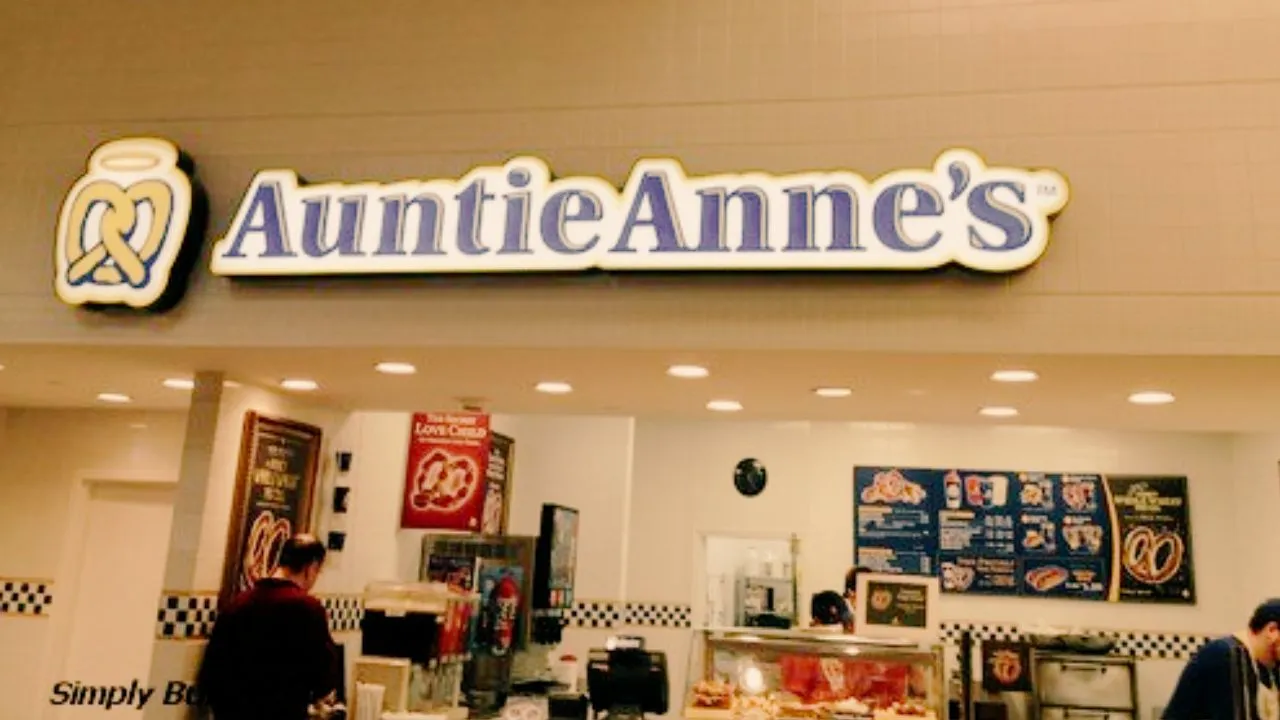
If you’ve walked past a shuttered Auntie Anne’s in your local mall and wondered whether the whole brand is collapsing, you’re not alone. That “Permanently Closed” sign can feel like a warning. But the reality is more straightforward than the panic suggests.
Auntie Anne’s is not going out of business. Individual stores are closing — some of them long-running locations — but the brand itself is still operating, still franchising, and still opening new locations in some markets. Here’s what’s actually going on.
Auntie Anne’s Is Not Going Out of Business as a Brand
No bankruptcy filings. No announced system-wide shutdown. No credible trade or mainstream news reports of a full brand closure. That much is clear from the available evidence.
Auntie Anne’s operates more than 1,500 locations worldwide. It’s owned by Focus Brands, the same parent company behind Cinnabon and Jamba. A company with that kind of footprint doesn’t quietly disappear — if it were actually shutting down, you’d see it covered widely in business news.
What people are noticing locally is something different: a network adjustment. Some stores close. Some new ones open. That’s normal for any large franchise system, even healthy ones.
What Auntie Anne’s Actually Is and How It Works
Auntie Anne’s was founded in 1988 by Anne and Jonas Beiler in Downingtown, Pennsylvania. It started as a single market stand selling hand-rolled soft pretzels. Today it’s one of the most recognized snack brands in U.S. malls.
The key thing to understand is the franchise model. Auntie Anne’s corporate doesn’t own and run most of its stores. Instead, it licenses the name, recipes, and systems to independent business owners who each operate their own location.
Each franchisee signs their own lease, hires their own staff, and makes their own business decisions. Think of it like a licensed coffee shop. If the owner decides to close up, that’s their call — not the brand’s. The brand keeps going; that one shop just stops.
This is why one Auntie Anne’s can shut down while a dozen nearby locations stay open. They’re separate businesses that happen to share a name.
Why So Many Auntie Anne’s Locations Are Closing
The closures people are seeing aren’t random. There’s a real pattern, and it comes down to one main factor: malls.
Auntie Anne’s built its growth around shopping mall food courts. That made sense for decades — malls had heavy foot traffic and a captive audience looking for a snack. But U.S. mall traffic has dropped significantly over the past several years. When a mall loses anchor tenants like department stores, fewer people walk through the door, and food court vendors feel it fast.
A few specific examples make this clear:
- The Nittany Mall Auntie Anne’s in State College, Pennsylvania closed after 24 years of operation. It wasn’t a struggling startup — it was a long-established store that finally gave out as mall conditions changed.
- A location at Lycoming Mall in Pennsylvania posted a sign reading, “We held on as long as we could.” An Auntie Anne’s spokesperson confirmed the store is permanently closed with no plans to reopen there.
- At the Shops at Ithaca Mall in New York, a combined Auntie Anne’s and Carvel location closed after more than ten years of operation. That left only two dining options in the entire mall — a sign of how far that particular mall had declined.
These are site-specific failures tied to local economics, not evidence that the brand itself is failing. The stores that closed were in malls that were already struggling. Take away the foot traffic, and food court businesses don’t survive long.
Recent Signs the Brand Is Still Investing in Its Future
If Auntie Anne’s were quietly winding down, you wouldn’t expect to see major franchise acquisitions or new store formats. But both have happened recently.
In 2021, Auntie Anne’s opened its first-ever drive-thru location, in partnership with Jamba. That’s a deliberate move away from mall dependency. Instead of waiting for mall traffic to recover, the brand is experimenting with formats that meet customers where they already are — in their cars, running errands, not browsing a food court.
Then in 2022, a company called Fresh Dining Concepts acquired 73 Auntie Anne’s locations from another franchisee called Double P Corp. That deal made Fresh Dining Concepts the largest Focus Brands franchisee in the snack category.
Think about what that means. Someone looked at 73 Auntie Anne’s stores and decided to put serious capital into buying them. Companies don’t acquire large blocks of franchise locations in a brand they think is dying. That’s a vote of confidence, expressed in dollars.
There are also reports of new combo locations — Auntie Anne’s paired with other brands — appearing in some markets. Expansion is selective right now, not aggressive, but it’s happening.
How to Tell the Difference Between a Struggling Store and a Struggling Brand
This is where a lot of the confusion comes from. When you see a closed Auntie Anne’s, it’s easy to assume the whole company is in trouble. But closing stores and going out of business are two different things.
Here’s a simple way to think about it:
- A struggling store is tied to a specific location — bad lease terms, a declining mall, a difficult local market, or a franchisee who decided to move on.
- A struggling brand shows up differently — in bankruptcy filings, in system-wide closures, in trade press reporting financial distress, or in the parent company announcing a wind-down.
None of the second category applies to Auntie Anne’s right now. What’s happening is the first category playing out repeatedly, which feels bigger than it is because malls across the country are all facing similar pressure at the same time.
For a broader look at how franchise businesses handle market shifts, Upward Business Daily covers these kinds of business trends in plain language worth checking out.
What This Means If Your Local Auntie Anne’s Just Closed
It’s frustrating to lose a familiar food spot, especially one that’s been in your mall for years. But a closed location doesn’t mean Auntie Anne’s is gone from your area permanently.
The brand’s store locator will show nearby locations, and some markets are seeing new combo formats or drive-thru options that didn’t exist a few years ago. If your mall location is gone, a different format might appear closer to you over time.
What’s less likely is that Auntie Anne’s disappears entirely from your region. The brand is still active, still franchising, and still attracting investment from large operators who see room to grow.
The Bottom Line
Auntie Anne’s is not going out of business. The brand has over 1,500 locations, an active parent company in Focus Brands, and recent evidence of investment — including a major franchise acquisition and its first drive-thru format.
What is happening is that mall-based locations are closing at a higher rate than before, driven by declining mall traffic rather than brand failure. Individual franchisees are making tough calls about locations that no longer make financial sense.
That’s a real trend worth understanding. But it’s not the same as a company collapsing. The stores you see closing are often the ones in the weakest malls — and the brand itself is actively working to find formats that don’t depend on malls at all.
If you see a “Permanently Closed” sign, the most likely explanation is that one franchisee in one struggling mall made a hard business decision. Thousands of locations are still open, still rolling pretzels, and still doing business.
Also Read: