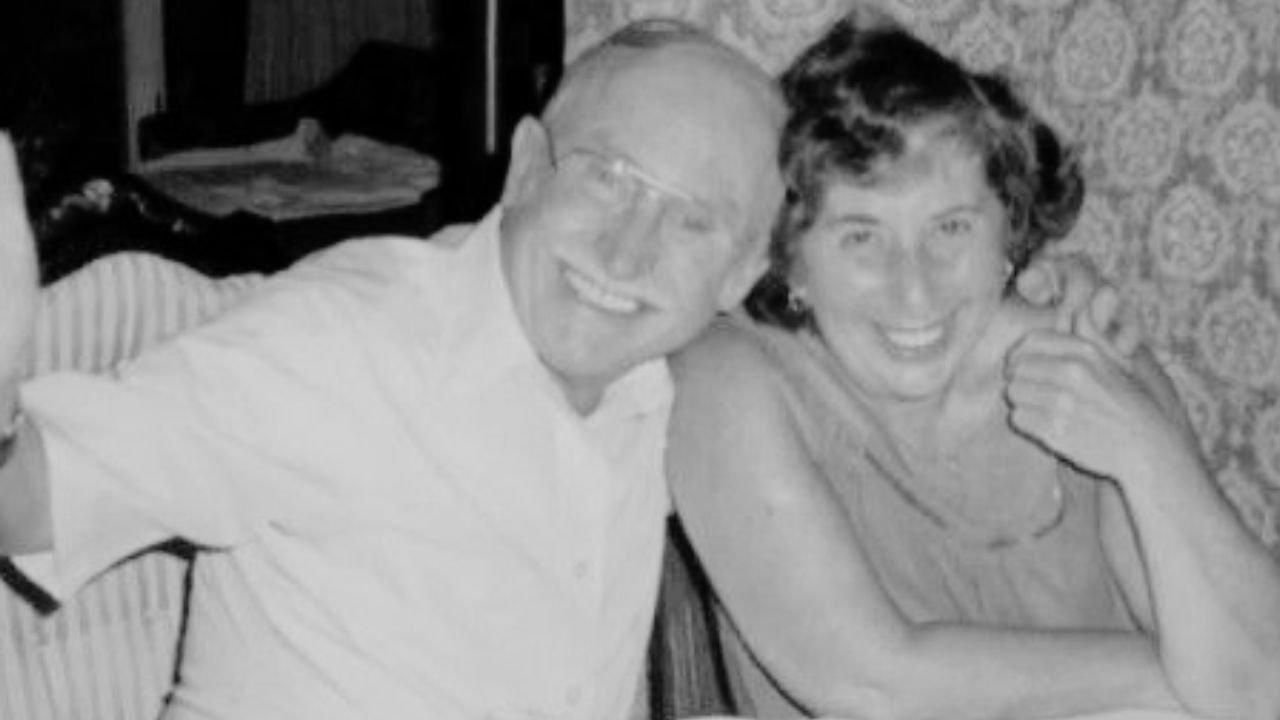
Most people know Jerry Seinfeld as one of the most successful comedians in American history. But fewer know the name Kálmán Seinfeld — the man who raised him. Kálmán was not a celebrity. He was a sign painter from New York with a quiet but meaningful place in the story of his son’s life.
This article covers who Kálmán Seinfeld was, what he did for a living, where his family came from, who he married, and how his real life differs from the fictional father Jerry portrayed on television.
Who Was Kálmán Seinfeld?
Kálmán Seinfeld was the father of comedian Jerry Seinfeld, born Jerome Allen Seinfeld on April 29, 1954, in Brooklyn, New York. Kálmán was not a public figure in his own right. He is known almost entirely through biographical accounts and genealogical research connected to his famous son.
One thing worth clarifying upfront: the name appears in different records under at least three spellings — Kálmán, Kalman, and Kalmen. These variations exist because names were sometimes transliterated differently from their original language, or entered inconsistently by officials and publishers over time. All three spellings refer to the same person.
Birth, Death, and Basic Life Details
According to genealogical sources, Kálmán Seinfeld was born on October 20, 1918, in New York. He died on January 31, 1985, in Florida. These dates come primarily from genealogy platforms and secondary biographical summaries, so they should be understood as plausible rather than officially confirmed.
One detail that stands out: Kálmán died in 1985, four years before Jerry’s television series Seinfeld first aired in 1989. He never saw his son reach the peak of his fame. The show that made Jerry a household name came after his father was already gone.
Kálmán’s Occupation and Small-Business Work
Kálmán worked as a sign painter — sometimes described as a sign maker — and ran a business known as Seinfeld Signs. His trade connected the family to commercial art, hand lettering, and the everyday grind of running a small business in New York.
This background gives useful context for the kind of household Jerry grew up in. It was a working family, tied to a craft and a business. That said, it would be too much to say that Kálmán’s sign-painting career directly shaped Jerry’s comedy. The connection is background context, not a simple cause and effect.
What is noted in biographical accounts is that Kálmán had a genuine sense of humor. According to Wikipedia, he collected jokes he had heard while serving during World War II. That detail suggests a man who appreciated comedy and may have helped make it feel natural in the household — though how directly that influenced Jerry’s career is impossible to measure.
Family Background and Eastern European Jewish Ancestry
Kálmán is generally described as being of Hungarian Jewish or Galician Jewish descent. These descriptions are not contradictory. Galicia was a region that stretched across parts of what is now Poland and Ukraine. For much of the 19th and early 20th century, it fell under the Austro-Hungarian Empire. So depending on which record, which era, and which border is being referenced, the same family roots might be described as Hungarian, Galician, or Austrian — and all could technically apply.
A New York Times genealogy report offers more specific detail. It traces Jerry’s paternal grandfather, Simon Seinfeld, to Stanislau — a city then part of Austria, now known as Ivano-Frankivsk in Ukraine. Simon came to the United States as a young tailor. The basic family line, as identified by the Times, runs like this:
- Simon Seinfeld and his first wife, Celia
- Their son, Kálmán Seinfeld
- Kálmán’s son, Jerry Seinfeld
Some secondary sources use variant spellings for Simon — including Shimshon or Schimscher — which again reflects the challenges of transliterating names from other languages into English records. These are likely the same individual, referred to differently across different documents.
Marriage and Children
Kálmán Seinfeld was married to Betty Seinfeld. Betty’s background was quite different from Kálmán’s. Her family was Syrian Jewish, with roots in Aleppo. This gave Jerry Seinfeld a mixed heritage — Eastern European Jewish on his father’s side, Syrian Jewish on his mother’s side — which reflects the broader diversity within American Jewish immigrant communities of the 20th century.
Together, Kálmán and Betty had at least two children. Jerry Seinfeld is the most widely known. Their daughter, Carolyn Liebling, is also identified in genealogical records. Beyond these basic family details, little else about Kálmán and Betty’s private life is part of the public record.
Jerry’s Mixed Cultural Background
Jerry Seinfeld’s upbringing brought together two distinct Jewish immigrant traditions. His father’s family came from Eastern Europe, carrying the history of Galician Jews who moved westward and then to America across generations. His mother’s family came from Syria, part of a separate wave of Jewish immigration centered around communities from Aleppo.
Neither side of that heritage is incidental. The combination shaped the cultural environment Jerry grew up in, even if the details of how that played out in daily family life are not widely documented. What is clear is that his background was not monolithic — it was the product of two different immigrant stories coming together in mid-20th-century New York.
The Real Father vs. the Fictional One
One of the most common points of confusion worth addressing: Kálmán Seinfeld was not the model for Morty Seinfeld, the fictional father played by Barney Martin in the television series Seinfeld.
In the show, Jerry’s parents are Morty and Helen — a retired raincoat salesman and his opinionated wife, living in a Florida retirement community. They were comedic, exaggerated characters written for television. They drew on recognizable Jewish-family and parental dynamics, but they were not meant to be literal portraits of Kálmán and Betty.
Kálmán, for his part, died before the show ever aired. He was a sign painter, not a raincoat salesman. The characters on the show were fictional creations. The real family behind Jerry Seinfeld was more ordinary and, in its own way, more interesting.
What the Record Actually Tells Us?
It is worth being honest about the limits of what we know. Kálmán Seinfeld was not a public figure. Most of the available information about him comes from genealogical research, a handful of biographical summaries, and reporting done in connection with his famous son.
The most reliable sourcing for his family history comes from the New York Times genealogy investigation published in 2009, along with reputable biographical encyclopedias. Genealogy platforms such as AncientFaces provide dates and family connections, but those records are user-contributed and should be treated as useful leads rather than confirmed facts.
For readers interested in this kind of family history research, resources like Upward Business Daily offer broader context on how individuals and families build legacies across generations — both in business and in culture.
What can be said with reasonable confidence: Kálmán Seinfeld was born in New York around 1918, worked as a sign painter, married a woman of Syrian Jewish descent, raised at least two children including one of the most successful comedians in American history, and died in Florida in 1985 — before any of his son’s greatest achievements had taken place.
A Quiet Figure Behind a Very Public Name
Kálmán Seinfeld lived a life that most people would call ordinary. He ran a small business, raised a family, and apparently had a good sense of humor. He was not famous. He did not seek attention. The record of his life is thin, as it is for most people who were not public figures.
But he is part of a story that a lot of people find genuinely interesting — the immigrant family background that shaped an American cultural icon. His grandfather arrived from a city in what is now Ukraine. His son became one of the best-known comedians in the world. That arc, from a tailor arriving in a new country to a son making millions laugh on television, is the kind of story that makes family history worth paying attention to.
Kálmán Seinfeld did not live to see the show that made his family name famous. But without him, there is no Jerry Seinfeld — and that, quietly, is what makes him worth knowing about.
Also Read: