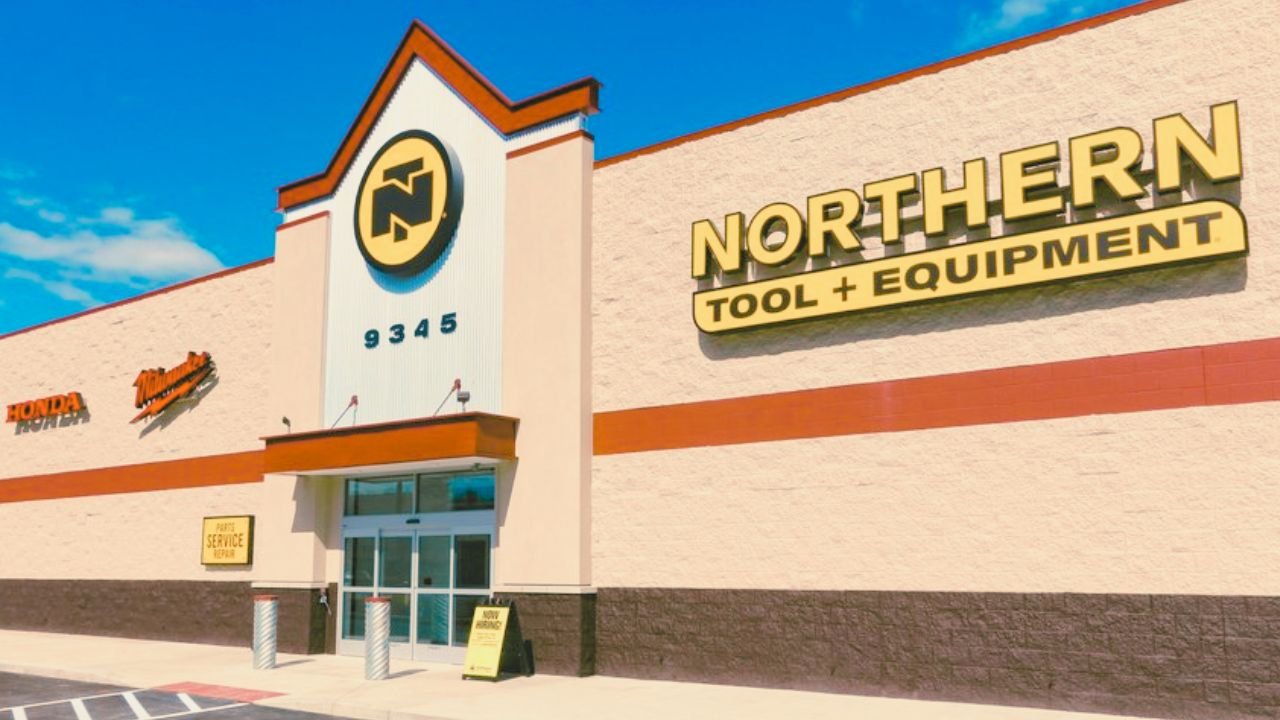
If you’ve been wondering whether Northern Tool is closing its doors, you’re not alone. Maybe you heard a rumor, saw a local store shut down, or just want to make sure it’s safe to buy that generator before pulling the trigger. It’s a completely fair question — and it deserves a straight answer.
This article breaks down what’s actually going on with Northern Tool right now. We’ll look at their financial health, recent business moves, store status, and how to tell the difference between a real warning sign and a rumor that got out of hand.
A Quick Look at What Northern Tool Actually Is
Northern Tool + Equipment has been around since 1981. It started as Northern Hydraulics in Burnsville, Minnesota, and grew into what it is today — a retailer and manufacturer of tools, light industrial equipment, and DIY supplies.
The company is privately held and family-owned, which matters more than you might think. It’s not traded on the stock market, so there’s no flood of quarterly earnings reports or investor updates for the public to dig through. That limited visibility can sometimes fuel speculation — even when things are perfectly fine.
Northern Tool sells through both physical stores and online. They also own several private-label brands you might recognize: NorthStar, Powerhorse, Klutch, Roughneck, and others. These aren’t just products they carry — they make them. That’s a meaningful part of their business model.
The Short Answer — No, Northern Tool Is Not Going Out of Business
Let’s get right to it. As of 2025, there is no evidence that Northern Tool is going out of business.
Third-party credit research from Martini.ai describes Northern Tool as having a strong credit profile. There are no bankruptcy filings on record, no defaults on obligations, and no notable credit risk events. That’s not a description of a company in trouble.
The numbers back that up too. Northern Tool brings in an estimated $1.6 billion in annual revenue, with steady growth rather than decline. They have around 1,800 employees and over 100 retail stores operating across 20 states. That’s not the footprint of a business quietly preparing to shut down.
Yes, being privately owned means you can’t look up their balance sheet like you could with a public company. But the absence of public financial data isn’t the same as a red flag. Plenty of healthy companies operate this way. Family-owned businesses, in particular, often run with a more conservative, long-term mindset than publicly traded chains chasing quarterly results.
What Northern Tool Has Been Doing Lately
Here’s something that really puts the “going out of business” question to rest: Northern Tool has been growing, not shrinking.
In April 2021, they acquired Jacks Small Engines, a well-known online retailer of small engine parts and outdoor power equipment. The goal was to expand their parts and service offerings — making Jacks products available both online and in Northern Tool stores.
That’s not the kind of move a company makes when it’s preparing to close. Think of it like a grocery chain buying a specialty food supplier. You don’t do that if you’re trying to wind things down. You do it because you want to grow and offer more to your customers.
On top of that, Northern Tool has an active LinkedIn presence showing ongoing hiring activity. Companies planning to go under don’t keep posting job openings. These are small signals, but they add up to a consistent picture of a business that’s still very much operating.
Why People Assume a Retailer Is Failing (And How to Read the Signs)
This is worth talking about, because it happens all the time — not just with Northern Tool.
When a store in your city closes, it’s easy to assume the whole company is in trouble. But retail chains close individual locations for all kinds of reasons: high lease costs, low foot traffic in that specific area, or just a shift in how people shop. This happens at healthy companies like Home Depot and Walmart too. A single closure is not a company collapse.
The same goes for online rumors. One outdated article, a social media post from someone reacting to a local closure, or general news about the retail industry can all get misread as company-specific distress. It spreads fast, and it sticks — even when the underlying facts don’t support it.
So how do you spot a real warning sign? Here’s what actual trouble looks like:
- A formal Chapter 11 or Chapter 7 bankruptcy filing in U.S. courts
- An official announcement of mass store closures or liquidation sales
- Multiple simultaneous closures across many states with no explanation
- Major credit downgrades or reports of missed debt payments
None of those things apply to Northern Tool right now. In fact, stores in Austin, TX, Burnsville, MN, and Mount Prospect, IL are all listed as actively operating with normal business hours. The lights are on.
It’s also worth noting that the broader tools and home improvement retail sector has faced rising pressure since the early 2020s — inflation, higher interest rates, shifting consumer habits. That’s real, and it affects many retailers. But sector-wide stress is not the same as a specific company failing. Northern Tool hasn’t triggered any distress events within that broader environment.
What This Means If You’re a Customer or an Employee
If You’re Thinking About Making a Purchase
Maybe you’re eyeing a NorthStar pressure washer or a big generator and wondering whether the warranty will actually be honored a year from now. That’s a smart thing to think about before spending real money.
Based on everything available — the credit profile, the revenue figures, the acquisition activity, and the continued store operations — there’s no current reason to avoid buying from Northern Tool. The company has been in business since 1981 and shows no signs of the kind of financial collapse that would leave you without support.
That said, no one can guarantee what any company will look like years from now. Retail is a changing industry. The smart move is to keep an eye on the signals mentioned above and make decisions based on current evidence, not fear.
If You Work There or Are Thinking About It
For current employees or job seekers doing their homework, the picture looks reasonably stable. The company is still hiring, still expanding its product reach through acquisitions, and has no reported layoffs or restructuring announcements tied to financial distress.
That doesn’t mean every location is untouchable — retail always has some degree of uncertainty. But a company with $1.6 billion in revenue, a solid credit profile, and an active growth strategy isn’t the kind of place that suddenly vanishes overnight.
If you want to keep tabs on things going forward, Upward Business Daily covers business news and retail trends that can help you stay informed over time.
How to Keep an Eye on Things Going Forward
Even with all the positive signals, it makes sense to stay informed — especially if you have ongoing purchases, warranties, or a job tied to this company.
Here’s what to watch for:
- Court filings: Bankruptcy filings are public record. If Northern Tool ever files for Chapter 11 or Chapter 7, it will show up in U.S. court databases.
- Official press releases: Real mass closures or liquidations come with announcements. They don’t just quietly happen.
- Credit monitoring services: Sites like Martini.ai and others track credit risk for companies. A major downgrade would show up there.
As of the latest available information, none of these red flags exist for Northern Tool. But retail is a dynamic space, and it’s always worth checking in periodically rather than assuming everything stays the same forever.
The Bottom Line
Northern Tool is not going out of business. The evidence points clearly in the other direction — strong credit standing, steady revenue, active store operations, and a recent acquisition that signals growth, not retreat.
The rumors likely come from a combination of individual store closures, limited public financial data, and general anxiety about the retail sector. That’s understandable. But once you look at the actual facts, the picture becomes a lot clearer.
If you were on the fence about a big purchase or wondering whether to apply for a job there, the current evidence gives you a reasonable foundation to move forward with confidence — while keeping a sensible eye on things as time goes on.
Also Read: